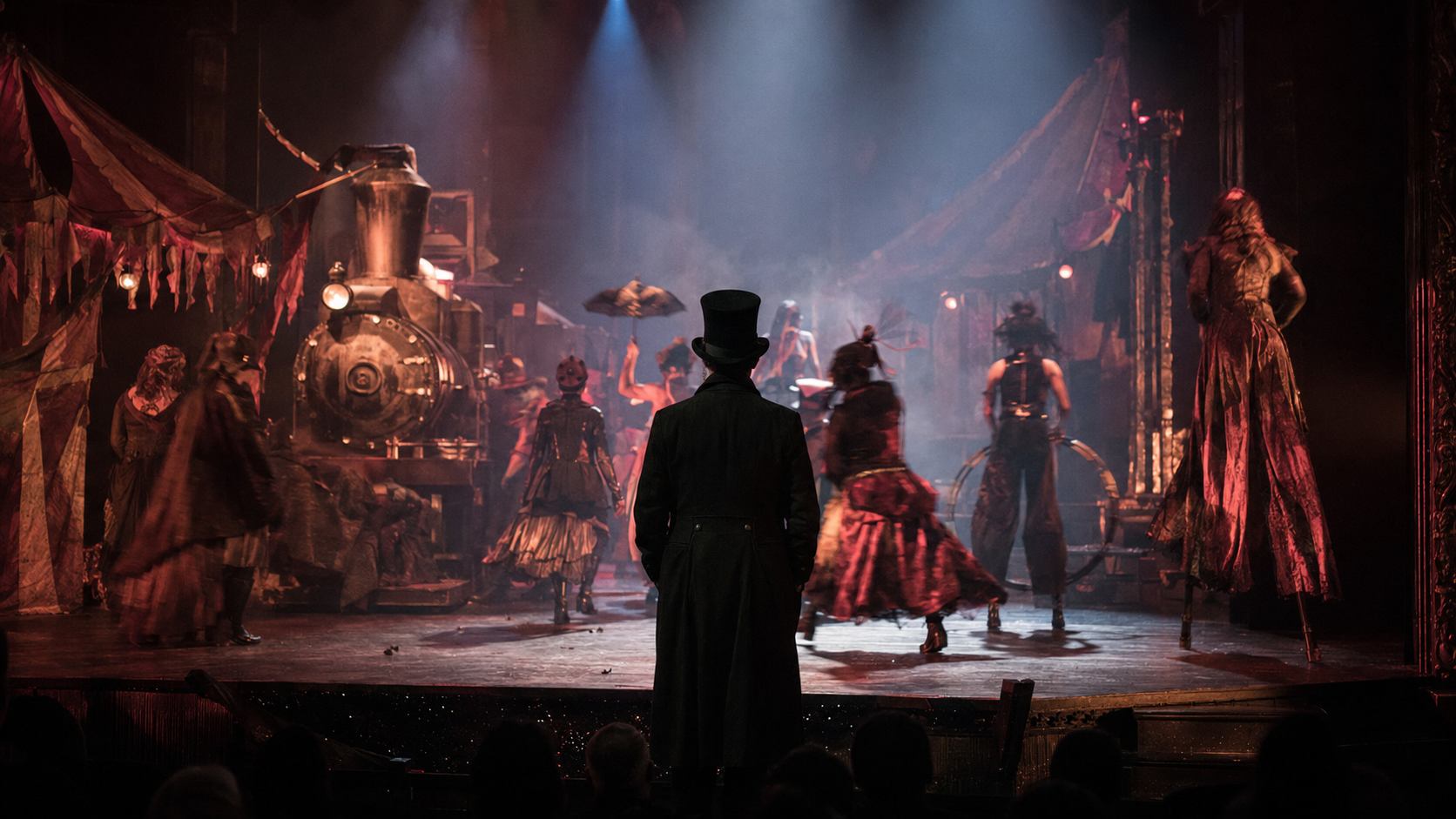
An Original English-Language Musical
NecromancerThe Musical
Symphonic rock musical · Dark fantasy
Created byAlexandre Diaconu
Book, music and lyricsAlexandre Diaconu
Original stage directionAlexandre Diaconu
LanguageEnglish
The Story
One hundred souls. One year. One chance to reclaim his own.
Johannes Cabal is a necromancer who refuses to accept death. After losing the woman he loved, he sold his soul to Satan for the knowledge to restore life. His experiments have produced only empty bodies and corrupted creatures. Without his soul, he has also lost the hope he needs to continue.
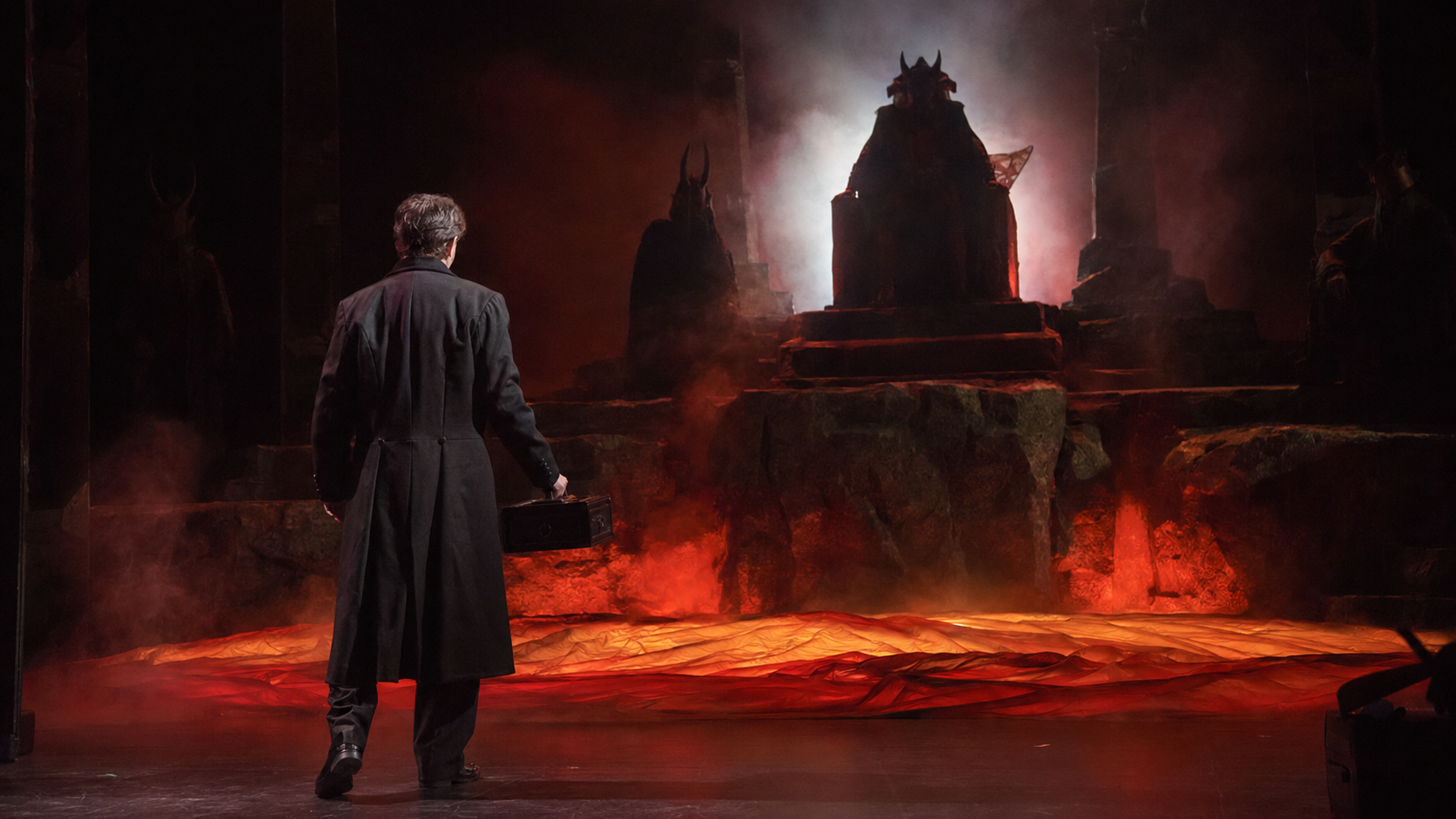
Johannes descends into Hell and demands a new agreement. Satan offers him a wager: collect one hundred souls within a year and his own will be returned. To complete the task, Johannes receives the Carnival of Discord, a travelling infernal fair where human desires are exchanged for eternal damnation.
He recruits his estranged brother Horst, now a vampire, to help him transform the carnival into a spectacle of temptation, fear, and desire. While Johannes treats each contract as progress towards defeating death, Horst rediscovers his humanity through Leonie Barrows, the daughter of the police inspector determined to destroy them.
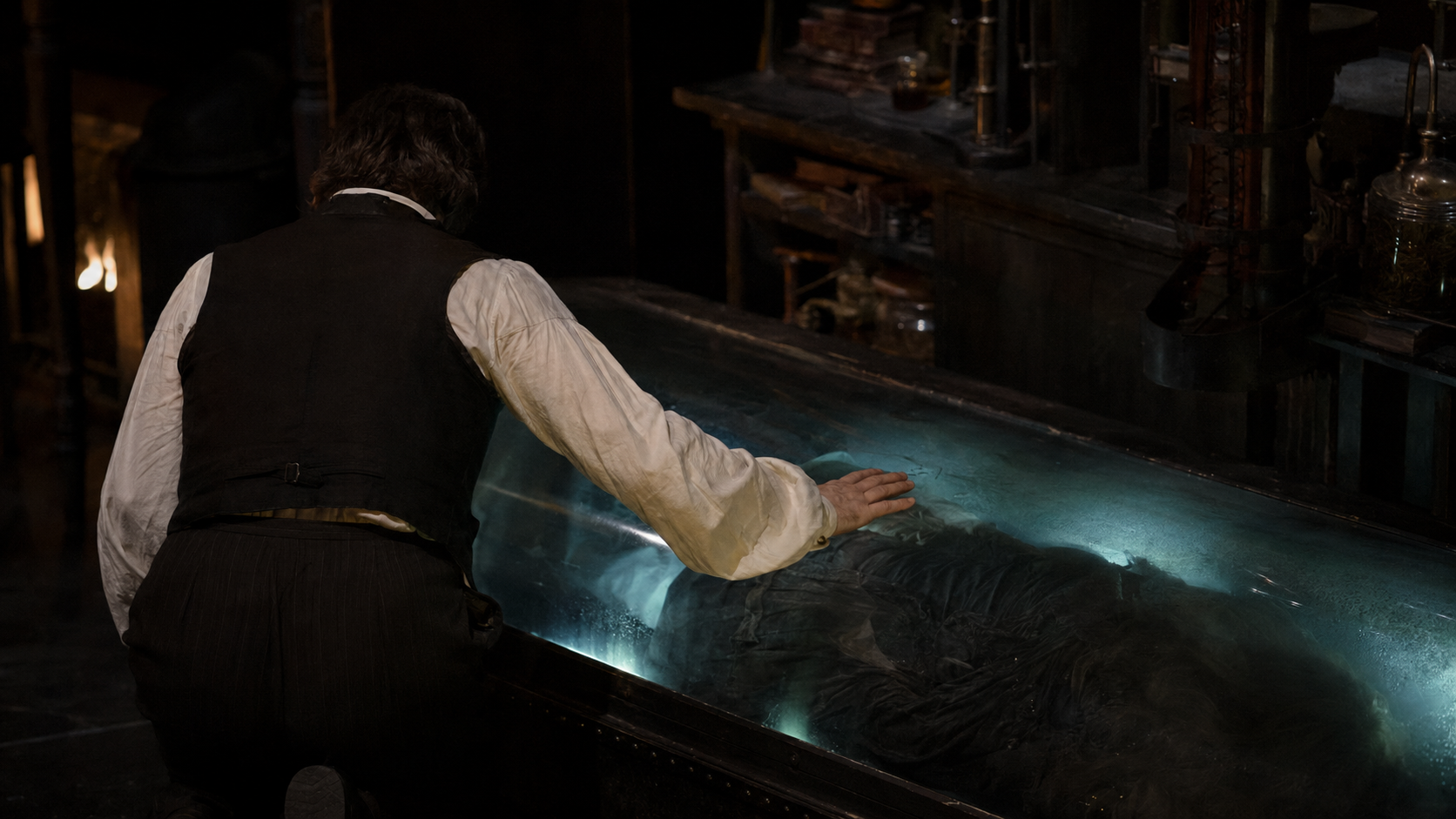
As the wager reaches its final night, the carnival revolts and Horst dies protecting Leonie. Johannes recovers his soul by exploiting the precise language of Satan’s contract, but his true victory comes when he secretly burns Leonie’s agreement and saves her from damnation. Hope restored, he returns to the laboratory. The woman he has fought to save moves.
The Dramatic World
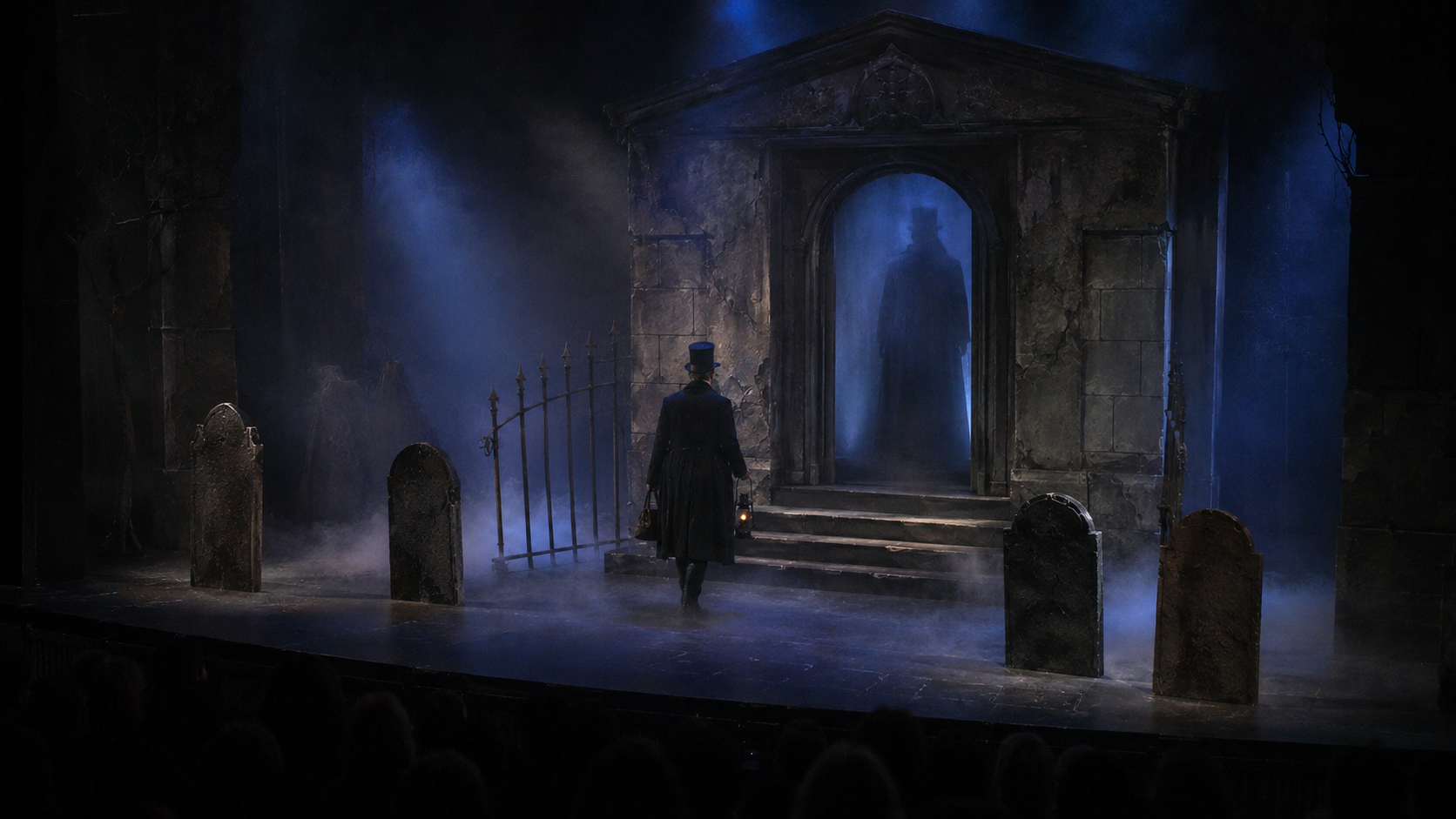
Hell does not invent corruption. It offers the opportunity to choose it.
The musical explores grief when it becomes a refusal to accept the limits of human existence. Johannes begins with an act of devotion, but his attempt to defeat death gradually consumes his morality, his family, and the lives of strangers.
The soul represents empathy, hope, conscience, and the ability to recognise another person’s humanity. Johannes believes he can sacrifice these qualities temporarily for a greater purpose. Every contract he collects brings him closer to the evil he claims to oppose.
The carnival promises beauty, wealth, revenge, and freedom, yet it merely reveals the desires people already carry within themselves. Its creatures may appear monstrous, but the most destructive choices often belong to those who consider themselves rational and pure.
Johannes and Horst move in opposite directions. The soulless human risks becoming a monster, while the vampire recovers his humanity through love and sacrifice.
At Its Heart
What are we willing to sacrifice for hope?
The meaning of the soul
Temptation and choice
Monstrosity and humanity
Brotherhood and sacrifice
Love without control
From the Creator
“What happens when saving one person becomes more important than every life in the way?”
Inspired by Jonathan L. Howard’s Johannes Cabal, the musical drew me towards a protagonist who enters Hell not as a victim, but as a man demanding the return of his soul. Johannes is intelligent, arrogant, relentless, and often terrifying. Beneath everything he does lies a profoundly human wound. Someone he loved died, and he refuses to accept that death should have the final word.
I did not want to present him as either a misunderstood hero or a heartless villain. His purpose may begin in love, but love does not absolve his choices. Souls become numbers, contracts become progress, and morality becomes something he believes can be addressed after success.
The Carnival of Discord gives this conflict a physical world. It is colourful, grotesque, seductive, violent, and alive with symphonic rock energy. Beneath the entertainment lies a machinery of damnation. Johannes loses his humanity as Horst, despite becoming a vampire, learns to love without possession and sacrifices himself for another person.
Satan does not defeat Johannes through supernatural power. He gives him permission to justify himself. Johannes’s victory lies not in outwitting Satan, but in the moment when another human life finally matters more than his experiment.
At the centre remains an unresolved question: if hope returns after everything we have sacrificed to recover it, are we still worthy of what we hope to save?
Alexandre DiaconuCreator, composer, writer, and stage directorProduction and Licensing
Bring Necromancer The Musical to a new stage.
For production, presentation, collaboration, adaptation, and licensing enquiries, contact The New Musical Company.
Begin a Conversation